
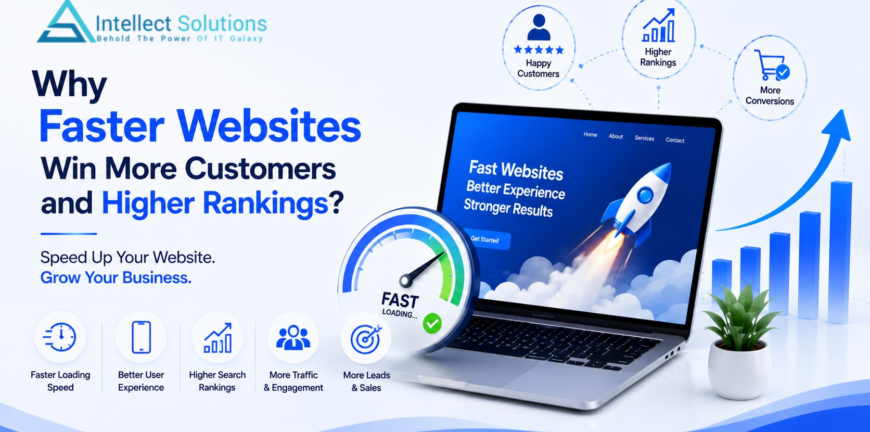
Why Faster Websites Win More Customers and Higher Rankings?
The rapid loading of web pages is more than only a technical benefit; it is now necessary for one’s business. Contemporary customers want web pages to load within an eye blink and go away from those websites that take too much time to respond. As a result, slower web pages may lead to lower conversion rates, higher bounce rates, and even lower positions in search results. Therefore, applying website speed optimization is an essential element of success in any digital marketing strategy. It does not matter whether you own a small business web page or a big e-commerce site because boosting the web page speed will improve customer experience and consequently the company’s performance. Why Website Speed Matters More Than Ever? Visitors of your site expect that they will have seamless browsing experience when they browse through your site, regardless of having it on a computer, tablet, or smartphone. Even with a lag of a few seconds, users may leave your site before they had a chance to use your services or products. Furthermore, Google evaluates sites according to their page experience and Core Web Vitals. There are several studies indicating that better performing sites tend to rank higher than others, as it is helping them to meet users demand. Fast-loading pages foster the trust to your site. Benefits of Website Speed Optimization Investing in the optimization of website speed has measurable benefits beyond faster loading times. Companies report improvements across various performance metrics. The key advantages are: Also, faster websites encourage visits to multiple pages, increasing the chances of generating inquiries or sales. Common Factors That Slow Down Websites Many online pages suffer from the loss of their precious traffic due to avoidable performance problems. Luckily, recognizing such problems is the right first step. Some of the popular offenders are: Large Image Files Pictures with a high resolution that haven’t been compressed use a lot of bandwidth and increase loading times. Optimized pictures free up some space while keeping them in good quality. Poor Hosting Speed If one uses a slow hosting server, the website will not be able to respond quickly. The hosting provider one picks does directly influence the loading speed. Excessive Plugins and Scripts Too many third-party apps create an additional burden on the server, delaying the appearance of the page. Un-optimized Code Heavy CSS, JavaScript, and HTML files increase the load of the webpage. No Caching If there is no caching, returning users will have to reload every page element. Best Practices to Improve Website Speed Increasing the performance of your website involves technical know-how as well as continuous monitoring. However, there are many effective techniques to use. First of all, you have to compress the images that you upload on the website. The WebP format is the new format that reduces the file size but keeps the quality. Next, it is necessary to enable browser caching for users to open the webpage quickly. Likewise, using a Content Delivery Network (CDN) distributes website content through servers located closer to your visitors. Don’t forget to remove unwanted plugins, optimize the database, and minimize HTTP requests. Combining and minifying CSS and JavaScript files is also beneficial. Also, you have to check Core Web Vitals regularly so that you can find all the problems you could face while using your website. The continuous testing will keep you ahead of the competition. Mobile Speed Is No Longer Optional Nowadays, many people use mobile devices to visit websites, which means that mobile performance affects how happy people are and how visible a page will be in search results. A mobile-optimized design is not enough to satisfy the needs of mobile users because they expect fast browsing. That is why it is also important to test performance on mobile devices when a website is optimized for a better speed because having a good performance on different types of devices makes the browsing experience smooth and accessible. Why Professional Optimization Makes a Difference? Despite the fact that many website administrators turn to the use of free speed-testing solutions, knowing how to interpret results and make necessary adjustments first requires a certain degree of competency on behalf of the user. This is something that experienced developers are completely aware of, as they know what aspects are important for website optimization such as server configuration, code optimization, images delivery, caching, database operations, etc. At SAIntellect Solutions, all optimization efforts aim toward achieving tangible improvements in terms of website speed while retaining its design, as opposed to one-size-fits-all solutions which are not effective as each website remains unique. Conclusion When your website is fast, it leads to higher user satisfaction, better search rankings, and improved conversion rates. But most importantly, it helps your business establish trust and authenticity in today’s highly saturated digital marketplace. Choosing to Invest in website speed optimization is far more than getting higher performance grades on page speed tests. It’s about offering your visitors an engaging experience that compels them to stay longer, explore deeper, and become paying customers. Are you eager for a faster, high-performing website that yields real business value? Work with the experts at SAIntellect Solutions, and get the best of our technical talent, together with our validated best practices for web speed optimization. Contact us today and find out what a faster website can do to catapult your business forward. FAQs 1. What is Website Speed Optimization? Website speed optimization is the process of improving a website’s loading time and overall performance through techniques such as image compression, code optimization, caching, and server improvements. 2. Why is website speed important for SEO? Google considers page experience and Core Web Vitals as ranking factors. Faster websites typically provide a better user experience, which can improve search engine rankings. 3. How can I check my website’s loading speed? You can use tools like Google Page-Speed Insights, GTmetrix, and Lighthouse to evaluate website performance and identify areas for improvement. 4. Does website speed affect conversion rates? Yes. Faster websites…